
Introduction
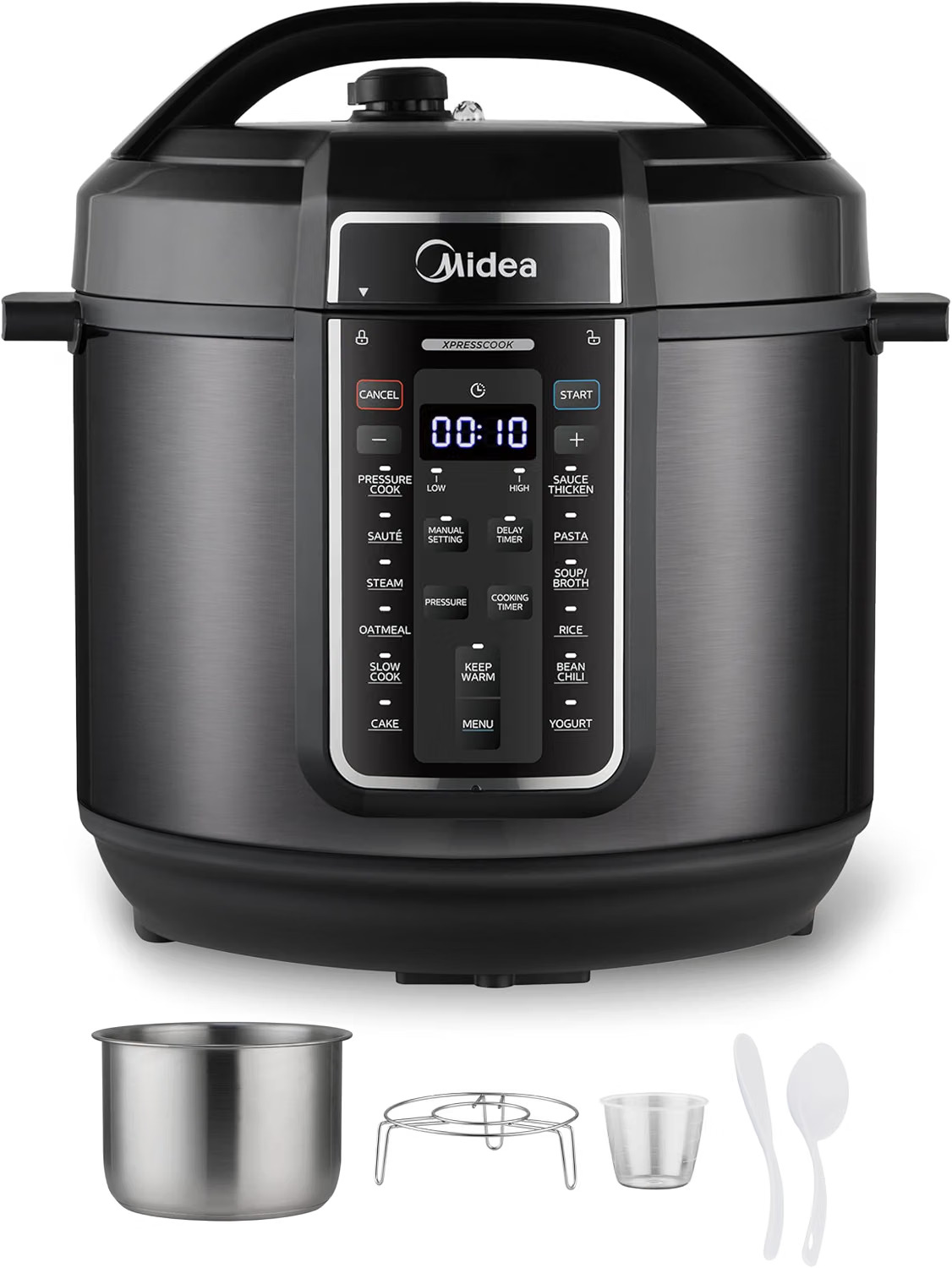
Modern kitchens often need appliances that can handle more than one cooking task without requiring a collection of separate machines. An electric pressure cooker can be useful in this situation because it combines pressure cooking with several other cooking functions in a single countertop appliance. The Midea 12-in-1 Electric Pressure Cooker, 8 Quarts, with a stainless steel inner pot is designed around this multi-function approach, offering preset cooking programs, a sauté function, rice-cooking capability, and built-in safety features.
Rather than viewing an appliance like this simply as a pressure cooker, it can be helpful to understand how its different functions fit into everyday cooking. Pressure cooking, for example, can be useful for foods that traditionally require longer cooking times, while sautéing can help prepare ingredients before the main cooking stage. A rice-cooking setting may also make the appliance useful for meals where rice is served alongside vegetables, beans, meat, or other ingredients.
The 8-quart capacity is another important part of the product. Capacity matters because the practical usefulness of an electric pressure cooker depends not only on its functions but also on how much food it can accommodate. A larger capacity can be relevant for households preparing several portions at once, meal preparation, or recipes that need additional cooking space.
The Midea model discussed here includes 12 preset menu options, allowing users to select a cooking program rather than manually adjusting every setting for every recipe. The exact suitability of each preset depends on the food being prepared and the instructions provided for that particular program.
This guide looks at the appliance from an informational perspective. It explains its main features, possible cooking applications, who may find an 8-quart multi-function cooker useful, and what to consider before choosing this type of appliance.
Key Features of the Midea 12-in-1 Electric Pressure Cooker
1. 12 preset cooking programs
One of the defining characteristics of this Midea electric pressure cooker is its 12 preset menu functions.
Preset programs are intended to simplify the cooking process. Instead of starting every recipe by determining the appropriate mode and manually configuring multiple parameters, a user can select a program designed for a particular type of preparation.
The usefulness of presets depends on the recipe and ingredients. A preset should not necessarily be treated as a universal setting for every version of a particular dish. Food quantity, ingredient size, liquid levels, and other preparation factors can affect cooking results.
For people who prefer a more straightforward approach to appliance cooking, preset programs can reduce the number of manual adjustments required.
2. 8-quart capacity
The cooker has an 8-quart capacity, which places it in a larger-capacity category of electric pressure cookers.
Capacity is worth considering before choosing a model because the amount of food prepared at one time can influence how convenient an appliance becomes. A smaller cooker may make sense for limited portions, while an 8-quart model can provide additional room for larger batches.
The stated capacity should not be interpreted as meaning that the entire interior can always be filled with food. Pressure cookers have maximum fill guidelines, and certain foods may require additional space because they expand during cooking or create foam.
Users should therefore follow the manufacturer’s instructions concerning maximum and minimum filling levels.
3. Stainless steel inner pot
The Midea model uses a stainless steel inner pot.
Stainless steel is a common material for cookware because it is durable and designed for repeated kitchen use. An inner pot made from stainless steel can also be useful for people who prefer this type of cooking surface.
As with any cookware, proper cleaning and handling are important. Food residue should be removed according to the manufacturer’s care instructions, and users should avoid cleaning methods or utensils that could damage the appliance or its components.
The inner pot is also removable, which can make transferring food and cleaning more practical, depending on the design and manufacturer’s instructions.
4. Sauté function
Pressure cooking is not the only cooking method available on the appliance. The sauté function provides an additional way to prepare ingredients.
For example, a recipe may begin by cooking onions, garlic, vegetables, or pieces of meat before pressure cooking begins. Having a sauté function in the same appliance means that some recipes can be prepared without transferring ingredients to a separate frying pan.
This can be particularly useful for one-pot recipes.
A typical sequence might look like this:
- Select the sauté function.
- Add the required ingredients and cooking fat according to the recipe.
- Cook or brown the ingredients as directed.
- Add the remaining ingredients and liquid.
- Switch to the appropriate cooking program.
- Follow the pressure-release instructions provided by the manufacturer or recipe.
Not every recipe requires sautéing, but the function can expand the range of dishes that can be prepared in the cooker.
5. Rice cooker functionality
The appliance can also be used for rice cooking.
Rice is a staple ingredient in many types of meals, so having a dedicated rice-related function can make the appliance useful beyond traditional pressure-cooked recipes.
Different varieties of rice can require different amounts of liquid and different cooking approaches. White rice, brown rice, wild rice blends, and other grains do not necessarily behave in exactly the same way.
For consistent results, it is sensible to follow the instructions associated with the particular rice being prepared rather than assuming one water-to-rice ratio will work for every variety.
6. Built-in safety features
Electric pressure cookers require appropriate safety mechanisms because they operate with pressurized steam.
The Midea model includes safety features intended to support pressure-cooking operation. These systems are an important part of the appliance and should always be used as directed.
Pressure-cooking safety is not only about the appliance’s built-in mechanisms. Correct user operation also matters. The lid should be properly positioned and locked when required, the pressure-release mechanism should be handled according to the instructions, and users should never attempt to force the lid open while the cooker remains pressurized.
It is also important to keep steam vents and related components clean and unobstructed.
How Can the Midea 12-in-1 Pressure Cooker Be Used?
The appeal of a multi-function electric pressure cooker is largely connected to its flexibility. Instead of being limited to one type of dish, the appliance can support different stages of meal preparation.
Here are several practical ways the cooker can fit into everyday cooking.
Pressure-cooked meals
Pressure cooking is particularly associated with foods that benefit from a moist, enclosed cooking environment.
Beans, legumes, certain cuts of meat, stews, soups, and similar dishes are examples of foods that can be prepared using pressure-cooking methods.
The pressure created inside the sealed cooking environment raises the boiling point of water, allowing food to cook under higher-temperature conditions than conventional boiling at atmospheric pressure.
This is one reason pressure cooking can be useful for recipes that would otherwise involve relatively long cooking periods.
However, cooking times vary considerably between ingredients and recipes. A cooking time that works for one cut of meat or type of bean may not be appropriate for another.
Soups and stews
An electric pressure cooker can be convenient for soups and stews because many recipes involve several ingredients cooked together.
A basic preparation might include:
- Vegetables
- Beans or lentils
- Meat or poultry
- Broth or another cooking liquid
- Herbs and spices
The sauté function can potentially be used at the beginning to soften aromatic vegetables or brown ingredients. The pressure-cooking stage can then follow after the remaining ingredients and required liquid have been added.
Because recipes differ, the manufacturer’s recommended fill limits should be followed carefully, especially when preparing foods that expand or produce foam.
Beans and legumes
Dried beans and other legumes are another category where pressure cooking can be useful.
Traditional preparation methods may involve soaking and simmering. Pressure cooking offers another approach, although the appropriate process varies according to the type of legume.
Beans can expand significantly during cooking, so fill levels are particularly important. Users should follow the appliance manual and recipe guidance for quantities and liquid requirements.
This is an example of where the cooker can be useful for batch preparation. Once properly cooked, legumes can be incorporated into salads, soups, rice dishes, stews, or other meals.
Rice and grain-based meals
The rice-cooking functionality gives the appliance another everyday role.
A meal can be built around rice and combined with vegetables, legumes, chicken, fish, or other ingredients prepared separately.
For households that regularly serve rice, having a dedicated cooking function can reduce the need for another countertop appliance.
Different grains have different cooking characteristics, however, so users should consult appropriate instructions rather than assuming that the rice setting is suitable for every grain.
One-pot recipes
The combination of sautéing and pressure cooking makes one-pot preparation particularly interesting.
For example, a recipe could begin with sautéing onions and spices, followed by adding protein, vegetables, liquid, and grains. The pressure-cooking program can then complete the main cooking stage.
This approach can reduce the number of cookware pieces involved in a recipe.
It may also simplify cleanup because several preparation stages occur inside the same removable inner pot.
Meal preparation
An 8-quart cooker can also be relevant for meal preparation.
Someone preparing food for several days may want to make a relatively large batch of soup, beans, stew, shredded meat, or another suitable recipe.
Batch cooking can make it easier to portion meals for later use. The important consideration is not simply the appliance’s capacity but whether the chosen recipe is appropriate for pressure cooking and whether the food can be stored safely after preparation.
Cooked food should be handled, cooled, stored, and reheated according to appropriate food-safety practices.
Who May Find an 8-Quart Electric Pressure Cooker Suitable?
The Midea 8-quart format may be worth considering for several types of kitchens.
Families and larger households
A larger-capacity cooker can be practical when meals need to serve several people.
Instead of preparing multiple small batches, a larger appliance may provide enough capacity for recipes intended to produce several portions.
The exact number of servings depends heavily on the recipe, ingredients, and safe maximum fill levels.
People who prepare meals in batches
Meal-prep routines can benefit from appliances capable of producing larger quantities.
For example, a user might prepare a batch of lentils on one day, a stew on another, or a large quantity of rice for meals throughout the week.
The 8-quart format provides more capacity than many smaller electric pressure cookers, although users should still consider their storage space and typical meal sizes.
People who want several functions in one appliance
Some kitchens have limited countertop or cabinet space.
A multi-function appliance can potentially reduce the number of separate devices needed for certain cooking tasks. In this case, pressure cooking, sautéing, and rice cooking are combined within one appliance.
This does not mean that a multi-function cooker completely replaces every other kitchen appliance. A conventional skillet, oven, saucepan, or specialized appliance may still be useful depending on the cooking style.
Beginners exploring pressure cooking
Someone new to pressure cooking may appreciate preset programs because they provide a more structured way to approach different types of recipes.
However, beginners should still read the instruction manual carefully before using the pressure function.
Understanding basic concepts such as pressure release, liquid requirements, fill limits, and lid operation is more important than simply selecting a preset.
Important Things to Consider Before Choosing This Type of Cooker
A multi-function pressure cooker can be useful, but it is not necessarily the right format for every kitchen.
Countertop and storage space
An 8-quart pressure cooker is not a particularly small appliance.
Before choosing one, consider where it will be used and where it will be stored.
There should also be enough open space around the appliance for safe operation, particularly because pressure cooking involves hot steam.
Avoid positioning it directly beneath cabinets or in locations where escaping steam could damage surrounding surfaces.
Understanding pressure release
Pressure release is an important part of using an electric pressure cooker.
Depending on the recipe and appliance instructions, pressure may be released naturally or through the designated release mechanism.
Users should never place their hands or face directly over a steam outlet.
The pressure indicator and lid-locking mechanism should also be treated as safety components rather than merely operating conveniences.
Always follow the manufacturer’s instructions for releasing pressure and opening the cooker.
Cooking capacity is not the same as usable fill capacity
An 8-quart label describes the overall capacity of the cooker, but that does not mean users should fill it to the top.
Some foods expand considerably. Others can foam or create a large amount of steam.
Rice, beans, and certain other ingredients therefore require particular attention to fill levels.
This is an important distinction when comparing pressure cookers based solely on their advertised capacity.
Cleaning requirements
A pressure cooker contains more components than a basic saucepan.
The inner pot needs regular cleaning, but users should also pay attention to the lid, sealing components, steam-release areas, and other removable or accessible parts specified by the manufacturer.
Regular cleaning is important not only for hygiene but also for maintaining proper operation.
The exact cleaning method should come from the Midea instructions, especially for components that should not be submerged or cleaned in a particular way.
Learning the different programs
Having 12 preset functions provides flexibility, but more settings can also mean a short learning curve.
It is useful to understand what each preset is designed to accomplish rather than selecting a program based only on the name of a dish.
For example, two recipes that both contain meat may require different cooking methods because of differences in cut, quantity, moisture, and preparation.
Recipes should therefore be treated as a combination of ingredients, quantities, cooking time, and method rather than relying on a preset label alone.
Comparing General Categories of Electric Pressure Cookers
When considering an electric pressure cooker, it can be helpful to compare categories rather than focusing only on brand names.
Compact pressure cookers
Compact models are generally intended for smaller kitchens, individuals, couples, or smaller portions.
Their smaller footprint can make storage easier, but their capacity may be less convenient for batch cooking.
Mid-size multi-function cookers
Mid-size models can provide a balance between capacity and countertop space.
They may offer pressure cooking alongside functions such as slow cooking, steaming, sautéing, or rice preparation.
These models can suit households that want flexibility without choosing one of the largest available capacities.
Large-capacity multi-function cookers
An 8-quart appliance falls into the larger-capacity category commonly considered by families and people who prepare larger batches.
The advantage is additional cooking capacity. The trade-off is that the appliance generally requires more storage and countertop space.
For someone who normally cooks small portions, a large capacity may not provide much practical benefit.
Single-purpose rice cookers
A dedicated rice cooker focuses primarily on rice and related grain preparation.
Compared with a multi-function pressure cooker, it generally offers a narrower range of cooking applications but may be attractive to people whose main priority is rice.
The Midea cooker takes a different approach by combining rice functionality with pressure cooking and other cooking modes.
Traditional stovetop pressure cookers
Stovetop pressure cookers use a conventional burner rather than an electric control system.
They can offer a different cooking experience and often require more direct monitoring.
An electric pressure cooker, by contrast, integrates electronic controls and preset programs into the appliance.
Neither category is automatically appropriate for everyone. The better choice depends on cooking habits, kitchen setup, preferred controls, capacity requirements, and familiarity with pressure cooking.
Practical Cooking Ideas
The Midea 12-in-1 cooker can be incorporated into many everyday meal patterns.
Weeknight soup
Use the sauté function to soften onions and other aromatic ingredients. Add vegetables, broth, beans, and seasonings before using an appropriate cooking program.
Rice and vegetables
Prepare rice using the rice-cooking functionality and serve it with separately prepared vegetables or another protein.
Bean preparation
Prepare a batch of beans or lentils for use in several meals, while observing appropriate fill and liquid requirements.
Stews
Brown suitable ingredients using sauté mode, add vegetables and cooking liquid, and continue with a pressure-cooking program appropriate for the recipe.
Batch cooking
Prepare larger quantities of suitable dishes and portion them for later meals.
These examples illustrate possible uses rather than fixed recipes. Cooking time, ingredients, liquid levels, and pressure-release methods should always be adapted to the specific recipe and manufacturer’s instructions.
Frequently Asked Questions
What is the capacity of the Midea electric pressure cooker?
The model discussed here has an 8-quart capacity. This makes it a larger-capacity option among electric pressure cookers and can be useful for larger meals or batch cooking.
Does it work as a rice cooker?
Yes. Rice cooking is among the functions associated with this Midea model.
The appropriate cooking method can vary depending on the rice variety, so users should follow the product instructions and appropriate recipe guidance.
Does it have a sauté function?
Yes. The cooker includes a sauté function, which can be useful for browning ingredients or preparing aromatics before another cooking stage.
What is the inner pot made from?
The inner pot is made from stainless steel.
Stainless steel is widely used in cookware and is designed for repeated use when properly maintained.
Is an 8-quart pressure cooker suitable for one person?
It can be used by one person, but whether it makes sense depends on cooking habits.
For someone who regularly prepares large batches or wants leftovers, the capacity can be useful. For very small meals, a smaller cooker may require less storage space and may be more proportional to typical portions.
Can it replace every kitchen appliance?
No. Although a multi-function pressure cooker can perform several cooking tasks, it should not be viewed as a complete replacement for every other kitchen appliance.
An oven, frying pan, saucepan, blender, or other appliance may still be useful depending on the recipe and cooking method.
Are pressure cookers safe to use?
Electric pressure cookers are designed with safety systems for pressurized cooking, and the Midea model includes safety features.
Safe operation also depends on the user. The appliance should be operated according to the manufacturer’s instructions, including proper lid positioning, appropriate fill levels, safe pressure release, and regular cleaning of relevant components.
Can I open the lid immediately after cooking?
The lid should not be forced open while the cooker is pressurized.
Users should follow the manufacturer’s instructions for the appropriate pressure-release process and wait until the appliance indicates that it is safe to open.
Can I use the cooker for meal preparation?
An 8-quart capacity can be useful for preparing larger batches of appropriate foods. Examples include soups, stews, beans, rice, and other recipes that can be prepared and stored safely.
Does the stainless steel inner pot require special care?
Like other stainless steel cookware, it should be cleaned according to the manufacturer’s recommendations.
Users should pay attention not only to the inner pot but also to the lid, sealing components, steam-release mechanism, and other relevant parts.
Are the 12 presets suitable for every recipe?
Not necessarily.
Preset programs are designed to simplify cooking, but ingredients and recipes vary. Users should choose the program that corresponds to the intended cooking method and follow the recipe and manufacturer’s instructions for quantities, liquid, and timing.
Conclusion
The Midea 12-in-1 Electric Pressure Cooker, 8 Quarts combines several kitchen functions in one appliance, including pressure cooking, sautéing, and rice preparation. Its stainless steel inner pot and larger capacity make it particularly relevant to people who prepare family meals, batch-cook, or want multiple cooking functions without using several separate countertop appliances.
Its 12 preset programs can provide a more structured cooking process, while the sauté function can make one-pot recipes more convenient by allowing ingredients to be prepared before pressure cooking. The rice-cooking capability adds another everyday use.
At the same time, an 8-quart cooker takes up more space than compact alternatives, and pressure cooking requires users to understand basic safety procedures. Capacity should also be considered alongside safe fill limits rather than treated simply as the amount of food that can always be placed inside.
For anyone considering a multi-function electric pressure cooker, the most important questions are practical: How much food do you normally prepare? Which cooking methods do you use most often? Do you have enough storage and countertop space? And are you comfortable following pressure-cooking safety instructions?
If those considerations match your kitchen habits, the Midea model’s combination of capacity, preset programs, sauté functionality, rice cooking, stainless steel construction, and safety features may be worth exploring further.