
Modern kitchens often have limited counter space, while everyday cooking can involve several different appliances. A pressure cooker, slow cooker, steamer, sauté pan, and sous vide machine may each serve a different purpose, but keeping all of them available is not always practical. Multi-function cookers are designed to simplify that setup by bringing several cooking methods into one appliance.
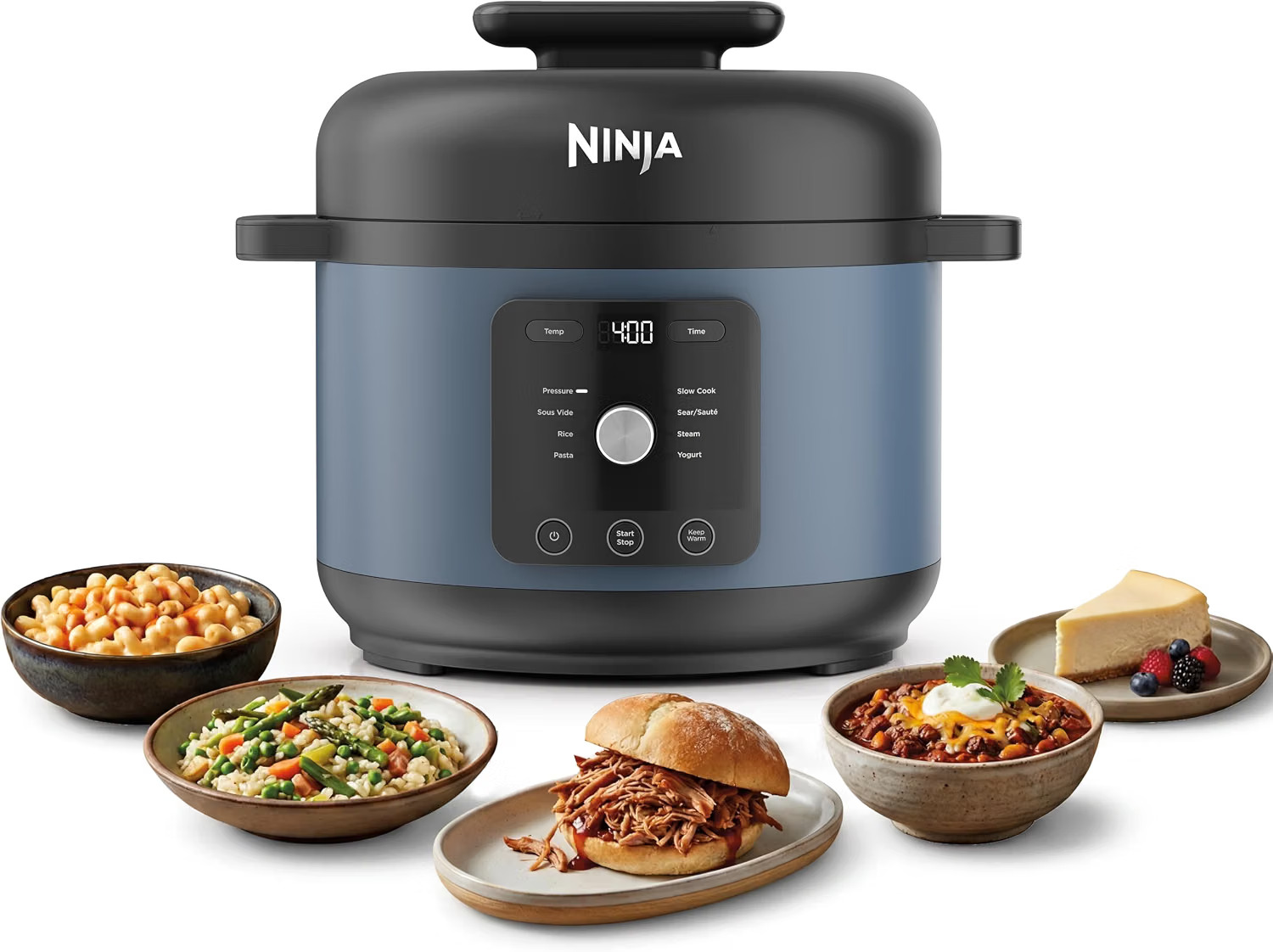
The Ninja HyperHeat 9-in-1 Pressure Cooker, 6.5-quart, Blue Macaron, PC201 is designed around that idea. It combines pressure cooking with functions such as searing, sautéing, slow cooking, steaming, and sous vide. The appliance also uses a 1200-watt heating system and includes a PFAS-free cooking pot, according to the product specifications provided for this model.
Rather than thinking of it as simply another pressure cooker, it can be useful to view the PC201 as a compact cooking system for preparing different types of meals with different techniques. Pressure cooking can help shorten cooking times for certain foods, while slow cooking offers a more gradual approach. Sautéing can be used before pressure cooking, steaming provides another way to prepare vegetables and other foods, and sous vide gives cooks access to a controlled low-temperature cooking method.
This guide explains the main features of the Ninja HyperHeat 9-in-1 Pressure Cooker, how its cooking functions can be used, who may find this type of appliance useful, and what to consider before choosing a multi-function pressure cooker.
An Overview of the Ninja HyperHeat 9-in-1 Pressure Cooker
The Ninja HyperHeat PC201 is a 6.5-quart electric pressure cooker designed to combine multiple cooking techniques in a single countertop appliance. Its nine cooking functions are intended to give users flexibility rather than requiring a separate appliance for every cooking method.
The 6.5-quart capacity provides a useful middle ground for households that want more room than a compact cooker without necessarily moving to a much larger commercial-style appliance. Capacity requirements will naturally depend on the type of meals being prepared, the number of people being served, and whether leftovers are part of the cooking routine.
One of the notable specifications is the 1200-watt power rating. Electrical power affects how an appliance heats and operates, although actual cooking time depends on the selected function, ingredients, quantities, starting temperature, and other factors.
The model is also identified by its Blue Macaron finish, giving it a distinctive appearance compared with more conventional stainless-steel or black countertop appliances.
The manufacturer describes the HyperHeat system as supporting faster cooking, including a claim that certain foods can cook twice as fast. That should be understood as a product performance claim rather than a guarantee that every recipe will take half the time. Pressure cooking generally requires time to build pressure and release it, so the total process can be longer than the programmed cooking time displayed on the appliance.
Key Features
1. Nine Cooking Functions in One Appliance
The main attraction of a multi-function pressure cooker is versatility.
Instead of using the appliance only for pressure cooking, the PC201 is designed to support several different techniques. Depending on the model’s specific programmed functions, users can move between methods such as pressure cooking, searing, sautéing, slow cooking, steaming, and sous vide.
This matters because different ingredients benefit from different cooking environments.
For example, tougher cuts of meat can work well with pressure cooking, vegetables can be steamed, onions and garlic can be sautéed as the first stage of a recipe, and a stew can be left to cook gradually using a slow-cooking function.
Having these options in one appliance can also make recipe preparation more streamlined.
2. Pressure Cooking
Pressure cooking is the central function of the appliance.
An electric pressure cooker heats liquid inside a sealed cooking environment, creating pressure that raises the cooking temperature above the normal boiling point of water. This can help certain foods cook more quickly while retaining tenderness.
Pressure cooking can be particularly useful for ingredients that normally require longer cooking times. Dried beans, certain cuts of meat, grains, stews, and soups are common examples.
However, pressure cooking is not automatically the right method for every ingredient. Delicate foods may benefit from steaming or another cooking technique, while some dishes are better suited to slow cooking.
It is also important to distinguish between pressure-cooking time and total recipe time. A recipe may require several minutes to reach pressure before the actual cooking countdown begins. Releasing pressure can also take additional time.
3. Sear and Sauté Functions
One practical feature of a multi-function cooker is the ability to brown ingredients directly in the cooking pot.
The sear or sauté function can be useful when preparing recipes that traditionally require a separate frying pan.
For example, a beef stew might begin with browning the beef. Onions, carrots, garlic, or other aromatics can then be sautéed before liquid and remaining ingredients are added.
This can reduce the number of dishes required during preparation.
Searing also has a culinary purpose beyond convenience. Browning meat can create additional flavor and color through the Maillard reaction. Similarly, sautéing onions and other aromatics before adding liquid can contribute more depth to soups, sauces, rice dishes, and stews.
The exact temperature and duration should be adjusted according to the recipe and ingredients.
4. Slow Cooking
Pressure cooking and slow cooking provide almost opposite approaches to meal preparation.
Pressure cooking focuses on speed and high-pressure cooking conditions. Slow cooking uses lower temperatures over a longer period.
The slow-cooking function can therefore be useful when a recipe benefits from extended cooking. Dishes such as chili, stews, pulled meats, soups, and certain bean recipes can be prepared using this method.
Slow cooking can also fit situations where the meal needs to cook gradually while the cook handles other tasks.
The trade-off is obvious: slow cooking requires more time. Its advantage is not speed but the ability to prepare foods using a gentler, longer cooking process.
5. Steaming
Steaming is another useful cooking method included in the appliance’s feature set.
Instead of cooking food directly in a large volume of water or oil, steam transfers heat to the food. This can be suitable for vegetables, seafood, dumplings, and other foods that can benefit from moist heat.
Steaming can also be useful when the goal is to avoid frying.
Because different foods have different cooking requirements, users should follow appropriate steaming times and make sure sufficient water is available for the selected cooking process.
6. Sous Vide
Sous vide is a cooking method that uses a controlled water bath to cook food at a relatively precise temperature.
The method is often associated with foods such as steak, chicken, fish, eggs, and certain vegetables. Food is generally placed in a suitable sealed bag before being immersed in the water bath.
The advantage of sous vide is temperature control. Instead of exposing food to a very high cooking temperature for a short period, the food can be cooked at a controlled temperature for a longer time.
This is a very different approach from pressure cooking, which means the inclusion of sous vide gives the appliance another distinct culinary capability.
Food-safety practices are particularly important when using sous vide. Appropriate temperatures, cooking times, food handling, and storage procedures should always be followed.
7. 6.5-Quart Capacity
The 6.5-quart capacity gives the PC201 enough space for a range of everyday recipes.
Capacity is particularly relevant for meals such as soups, stews, rice dishes, beans, and larger portions of meat.
Still, a stated capacity does not mean that the entire pot should always be filled. Pressure cookers have specific minimum and maximum fill requirements, and some foods can foam or expand during cooking.
Users should therefore follow the manufacturer’s instructions regarding maximum fill levels and ingredients that expand during cooking.
8. 1200-Watt Heating System
The Ninja HyperHeat PC201 is specified at 1200 watts.
Wattage indicates the electrical power the appliance is designed to use under its operating conditions. It can be useful when considering the appliance alongside other kitchen equipment or when checking electrical requirements.
However, wattage alone does not determine how quickly every recipe will cook. Pressure-building time, food quantity, liquid temperature, ingredient density, cooking method, and pressure-release method all influence the total cooking process.
9. PFAS-Free Cooking Pot
The product specification identifies the cooking pot as PFAS-free.
This is a material-related feature that may be important to shoppers who pay close attention to the materials used in cookware.
“PFAS-free” should not be interpreted as meaning that every component of the appliance is made without every possible chemical or material category. It specifically describes the stated characteristic of the cooking pot.
As with any cookware, users should follow the care instructions supplied with the appliance to help maintain the pot and its cooking surface.
10. Blue Macaron Design
Function is usually the main consideration when choosing a pressure cooker, but appearance can still matter in a kitchen.
The Blue Macaron finish gives the PC201 a softer, more decorative appearance than many traditional countertop cookers. For people who keep appliances visible on the counter, the design may be relevant when considering how it fits with the rest of the kitchen.
How the Ninja HyperHeat Pressure Cooker Can Be Used
A multi-function appliance becomes more useful when its functions are connected to real cooking situations.
Weeknight Soups
Pressure cooking can be useful for soups when there is limited time available for dinner preparation.
A basic soup can begin with sautéing onions and garlic, followed by vegetables, broth, herbs, and other ingredients. Pressure cooking can then be used to shorten the cooking stage for ingredients that normally need more time.
For recipes involving delicate vegetables, however, it may be preferable to add them later or use a steaming approach.
Beef and Vegetable Stews
Stews are another natural application.
The sear function can brown the meat before the remaining ingredients are added. Once the liquid is introduced, pressure cooking can help tenderize certain cuts of meat.
Alternatively, the slow-cooking function can be selected when a longer cooking process is preferred.
This gives the cook a choice between two different approaches to essentially the same type of meal.
Beans and Legumes
Dried beans and legumes can require significant cooking time using conventional methods.
Pressure cooking can reduce the cooking period for many varieties, although preparation requirements differ depending on the type of bean.
Because beans can expand significantly during cooking, appropriate fill limits and manufacturer instructions are particularly important.
Rice and Grain-Based Meals
Multi-function pressure cookers can also be useful for rice and grain dishes.
The appropriate cooking settings vary by grain, quantity, liquid ratio, and recipe. Measuring ingredients accurately is therefore important.
Once a reliable ratio and cooking method have been established, the process can become a convenient part of a regular meal routine.
Steamed Vegetables
Steaming is a simple way to prepare vegetables without submerging them in water.
Broccoli, carrots, green beans, cauliflower, and similar vegetables can be suitable candidates, although cooking times vary considerably.
One benefit of having a dedicated steam function is that users do not need to rely on a separate stovetop steamer for these meals.
Slow-Cooked Chili
Chili can work well with the slow-cooking function.
Ingredients such as beans, tomatoes, vegetables, spices, and meat can be combined and cooked gradually.
The slow-cooking method may be especially practical for people who prefer to prepare dinner earlier in the day and allow the dish to develop over a longer cooking period.
Searing Meat Before Pressure Cooking
The ability to sear in the same pot can simplify recipes that require browning.
Rather than transferring meat between a frying pan and pressure cooker, the initial browning stage can be performed in the cooking pot, followed by the remaining stages of the recipe.
This can reduce cleanup and make multi-step meals easier to organize.
Sous Vide Meals
Sous vide provides an alternative approach for people interested in precise temperature-controlled cooking.
Steak is a familiar example, but the technique can also be used for poultry, fish, eggs, and other suitable foods.
Because sous vide cooking is fundamentally different from pressure cooking, it expands the range of techniques available from the same countertop appliance.
Who May Find This Type of Cooker Suitable?
Busy Households
People who frequently prepare meals on busy schedules may appreciate having several cooking methods available in one appliance.
Pressure cooking can help with certain meals that would otherwise take longer, while slow cooking provides an option for preparing food gradually.
People With Limited Kitchen Space
A multi-function appliance can potentially replace the need for several individual countertop devices.
That does not mean it will completely replace every kitchen appliance. An oven, stovetop, blender, and other equipment may still be useful. However, combining several cooking techniques can reduce duplication.
Home Cooks Who Prepare One-Pot Meals
If soups, stews, beans, rice dishes, and similar meals appear regularly on the menu, a multi-function pressure cooker can fit naturally into that cooking style.
The ability to sauté and then continue cooking in the same pot can be especially convenient.
People Interested in Different Cooking Techniques
Someone who wants to experiment with pressure cooking, steaming, slow cooking, and sous vide may find the variety useful.
Instead of purchasing a separate appliance for each technique, the PC201 provides multiple methods in one unit.
Families and Meal-Preparation Households
The 6.5-quart capacity may be useful for people who prepare multiple portions at once.
Batch cooking can make weekday meals easier to organize, particularly for recipes that store or reheat well.
Capacity requirements will vary, though, so users should consider the typical number of servings they prepare rather than assuming that a larger pot is always preferable.
Important Things to Consider Before Using It
A multi-function pressure cooker can be versatile, but there are several practical points worth understanding before relying on it regularly.
Pressure Cooking Requires Safety Awareness
Pressure cooking involves a sealed cooking environment and elevated pressure.
Users should read the manufacturer’s instructions before operating the pressure function. The lid, sealing components, pressure-release system, and other safety features need to be used correctly.
It is also important not to force the lid open or interfere with the pressure-release process.
The manufacturer’s instructions should take priority over general cooking advice.
Cooking Time Is Not Always Total Preparation Time
A recipe that says “10 minutes at high pressure” does not necessarily mean the complete process will take only 10 minutes.
The cooker needs time to reach pressure, and the pressure-release stage can add additional minutes.
This distinction is important when planning meals around a specific dinner time.
Some Ingredients Need Special Attention
Ingredients that expand, foam, or become very thick can require special handling in pressure cookers.
Beans, grains, and certain other foods should be prepared according to the appliance’s instructions.
Following maximum fill lines and recipe guidance is especially important.
The Appliance Takes Counter Space
Although a multi-function cooker can reduce the number of appliances needed, it is still a substantial countertop appliance.
Before choosing one, consider where it will be stored and where it will be used.
A convenient location should provide adequate ventilation and enough surrounding space according to the manufacturer’s instructions.
Cleaning Matters
Multi-function appliances contain several components that come into contact with food, steam, moisture, and sauces.
The cooking pot, lid components, sealing ring, and other removable parts need appropriate cleaning after use.
Pressure-cooker components should also be inspected regularly according to the manufacturer’s care instructions.
Keeping the appliance clean is not merely about appearance; residue can affect odors, performance, and the condition of components over time.
Recipes May Require a Learning Curve
A pressure cooker behaves differently from a saucepan or conventional oven.
Users may initially need to adjust liquid quantities, cooking times, ingredient order, and pressure-release techniques.
The same recipe can also behave differently depending on ingredient size and quantity.
It is therefore sensible to begin with straightforward recipes before experimenting with more complicated adaptations.
General Comparison: Multi-Function Pressure Cookers and Other Kitchen Appliances
Rather than comparing individual brands, it is more useful to consider the broad categories of cooking appliances.
| Category | Main Strength | Potential Limitation |
|---|---|---|
| Multi-function pressure cooker | Several cooking techniques in one appliance | Learning multiple functions can take time |
| Traditional stovetop pressure cooker | Fast pressure cooking without an electronic countertop system | Requires stovetop use and more manual monitoring |
| Slow cooker | Convenient long-duration cooking | Meals generally require several hours |
| Rice cooker | Convenient rice and grain preparation | Usually more specialized |
| Electric steamer | Simple steaming | Primarily focused on steam-based cooking |
| Sous vide device | Precise temperature-controlled cooking | Specialized for a narrower cooking method |
| Dutch oven or heavy pot | Flexible stovetop and oven cooking | Cooking can require more active supervision |
| Air fryer | Dry, circulating-heat cooking and crisp textures | Not designed primarily for soups, pressure cooking, or liquid-based meals |
The key difference is versatility versus specialization.
A specialized appliance can be excellent at one particular task. A multi-function cooker instead attempts to provide several methods within one system.
For someone who regularly uses only one cooking technique, a specialized appliance may make more sense. For someone who wants flexibility and fewer separate countertop devices, a multi-function pressure cooker can be a more logical category to consider.
Tips for Getting More From a Multi-Function Pressure Cooker
Plan Recipes Around the Cooking Method
Think about the ingredient before choosing the function.
Tough meat may benefit from pressure cooking. A delicate vegetable may be better steamed. A chili can work with either pressure cooking or slow cooking depending on the desired schedule.
Use Sautéing Strategically
When a recipe starts with onions, garlic, spices, or browned meat, consider using the sauté function before switching to another cooking mode.
This can help build flavor while keeping the entire preparation in one pot.
Account for Pressure Release
When planning dinner, remember that pressure release can add time after the programmed cooking period.
Recipes using natural pressure release can require considerably more total time than recipes using a quicker release method.
The appropriate release method depends on the food and the recipe.
Avoid Overfilling
Pressure cooking has specific fill requirements.
Foods that expand or foam can require additional space, and certain recipes should not be prepared above specified levels.
Always use the manufacturer’s guidance as the final reference.
Keep the Sealing Components Clean
The sealing ring and pressure-related components are important parts of the cooking system.
Food residue can interfere with proper operation, so cleaning and inspection should be part of the normal routine.
Start With Manufacturer-Supplied Recipes
For new users, recipes and instructions provided with the appliance can be a useful starting point.
Once the basic functions are familiar, it becomes easier to adapt traditional recipes to pressure cooking, slow cooking, steaming, or other available modes.
Frequently Asked Questions
What is the Ninja HyperHeat 9-in-1 Pressure Cooker?
The Ninja HyperHeat 9-in-1 Pressure Cooker PC201 is a 6.5-quart electric multi-function cooker designed to provide several cooking methods in one appliance. Its listed functions include pressure cooking, searing, sautéing, slow cooking, steaming, and sous vide.
How large is the cooking capacity?
The cooking capacity is 6.5 quarts. The practical number of servings depends on the recipe, ingredient volume, and desired portion size.
Does the Ninja PC201 use 1200 watts?
Yes. The model specifications identify a 1200-watt power rating.
What does the PFAS-free pot mean?
The product specifications identify the cooking pot as PFAS-free. This describes the stated material characteristic of the pot and may be relevant to people who consider cookware materials when selecting kitchen equipment.
Can it be used as a slow cooker?
Yes. Slow cooking is one of the cooking methods available on the appliance.
Can it steam vegetables?
Yes. The appliance includes a steam function, making it suitable for preparing foods that can be cooked with steam when the appropriate setup and cooking instructions are followed.
Can it sear meat?
The appliance includes a sear function, which can be used to brown suitable ingredients before continuing with another stage of a recipe.
What is sous vide used for?
Sous vide uses a controlled-temperature water bath to cook food gradually. It can be used for foods such as steak, poultry, fish, eggs, and certain vegetables when appropriate temperatures and food-safety practices are followed.
Does “2X faster” mean every meal cooks in half the time?
No. The “2X faster” statement is a product performance claim and should not be interpreted as a guarantee for every recipe. Actual total cooking time depends on the food, quantity, selected function, time required to build pressure, and pressure-release method.
Is a 6.5-quart pressure cooker suitable for a family?
It can be suitable for households that regularly prepare multiple portions, but the right capacity depends on individual cooking habits. Users should also follow maximum-fill instructions rather than filling the pot to its stated capacity for every recipe.
Can pressure cooking replace a conventional oven?
Not completely. A pressure cooker is designed for different cooking conditions and cannot reproduce every function of an oven. It can, however, handle many soups, stews, meats, grains, vegetables, and other dishes using its available cooking methods.
Is pressure cooking difficult to learn?
The basic concept is relatively straightforward, but pressure cooking has its own procedures. New users should become familiar with the lid, pressure-release system, fill limits, liquid requirements, and safety instructions before experimenting with unfamiliar recipes.
What should be considered before purchasing a multi-function cooker?
Consider its capacity, available cooking functions, counter space, cleaning requirements, electrical requirements, recipe compatibility, and whether you will actually use multiple cooking methods. A multi-function appliance is most useful when its range of functions matches your normal cooking habits.
Final Thoughts
The Ninja HyperHeat 9-in-1 Pressure Cooker PC201 is designed for people who want more than a conventional pressure cooker. Its combination of pressure cooking, searing, sautéing, slow cooking, steaming, and sous vide creates a flexible cooking platform that can accommodate different recipes and schedules.
The 6.5-quart capacity gives users room for a variety of everyday meals, while the 1200-watt design provides the heating system behind the appliance’s cooking functions. The PFAS-free cooking pot is another specification that may matter to shoppers who pay attention to cookware materials. Its Blue Macaron finish also gives the appliance a distinctive countertop appearance.
At the same time, versatility does not automatically make a multi-function appliance appropriate for everyone. A person who mainly cooks rice, for example, may have little need for several other cooking modes. Similarly, someone who already owns dedicated appliances may not gain much from combining functions into one cooker.
For households that regularly prepare soups, stews, beans, grains, slow-cooked meals, steamed foods, or pressure-cooked recipes—and for cooks interested in experimenting with sous vide—the range of functions can make the category worth considering.
The most important step is to match the appliance’s capabilities with your actual cooking habits. Understanding how pressure cooking differs from slow cooking, how searing can be incorporated into one-pot recipes, and how sous vide works can help you decide whether this type of appliance fits naturally into your kitchen.